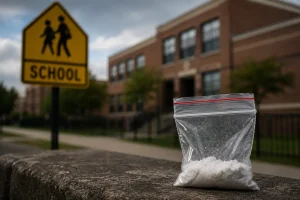
You’ve been charged with drug possession in Philadelphia. Maybe it was a traffic stop that turned into something far more serious than you expected. Maybe police showed up at your home. Maybe you were at the wrong place at the wrong time and now your name is on a criminal complaint you don’t fully understand.
Whatever brought you here, you’re facing a system that moves quickly — and the decisions you make before your first court date can determine whether this charge follows you for the rest of your life or gets resolved in your favor.
Drug possession charges in Philadelphia range from misdemeanors to serious felonies depending on the substance, the quantity, and what prosecutors believe you intended to do with it. As a former Philadelphia prosecutor who spent over a decade in the DA’s Office, I built these cases from the other side. I know what prosecutors look for, where the evidence is often weak, and how to use that knowledge to defend you.
This guide covers Pennsylvania drug possession law, what the charges actually mean, what happens in Philadelphia’s courts, and what your options are before you walk through that courthouse door.
Understanding Drug Possession Charges in Philadelphia
Drug possession charges in Pennsylvania are governed primarily by the Controlled Substance, Drug, Device and Cosmetic Act (35 P.S. § 780-101 et seq.) — commonly called the Drug Act. Under this law, it is illegal to knowingly or intentionally possess a controlled substance without a valid prescription.
But “drug possession” is not a single charge. There are meaningful legal distinctions that determine how serious your situation is and what penalties you face.
Simple Possession
Simple possession means you had a controlled substance on your person or in your control, and the quantity and circumstances suggest personal use. It is the less severe of the two main possession charges — but it is still a criminal offense that carries real consequences.
Possession With Intent to Deliver (PWID)
Possession with intent to deliver — sometimes called PWID or “intent to distribute” — is a felony. Prosecutors don’t need to catch you in the act of selling drugs to bring this charge. They infer intent from circumstantial evidence: the quantity of drugs, how they were packaged, the presence of scales, multiple cell phones, large amounts of cash, or text messages suggesting drug transactions.
PWID carries dramatically harsher penalties than simple possession, and Philadelphia prosecutors aggressively pursue these charges, particularly in cases involving larger quantities or drugs near schools.
Drug Paraphernalia
Pennsylvania law (35 P.S. § 780-113(a)(32)) also prohibits possession of drug paraphernalia — items used or intended for use in consuming, packaging, or concealing controlled substances. Paraphernalia charges often accompany possession charges and are a misdemeanor under state law.
How Drug Possession Charges Are Classified in Pennsylvania
The severity of your drug possession charge — and the penalties you face — depends heavily on the type and quantity of the controlled substance involved. Pennsylvania classifies controlled substances into five schedules based on their potential for abuse and accepted medical use.
Schedule I and II Substances (Highest Penalties)
Schedule I drugs have no accepted medical use and a high potential for abuse. Schedule II drugs have a high potential for abuse but some accepted medical use. Common examples include:
- Schedule I: Heroin, MDMA (ecstasy), LSD, psilocybin (mushrooms)
- Schedule II: Cocaine, methamphetamine, fentanyl, oxycodone (without a valid prescription), PCP
Simple possession penalty:Up to one year in prison and a $5,000 fine for a first offense.
PWID penalty:Up to 15 years in prison and a $250,000 fine, depending on quantity. Larger quantities trigger mandatory minimum sentencing in Pennsylvania.
Schedule III, IV, and V Substances
These schedules cover drugs with lower abuse potential or established medical uses, including certain prescription medications.
- Schedule III: Anabolic steroids, certain barbiturates, ketamine
- Schedule IV: Valium, Xanax, Ambien (without a valid prescription)
- Schedule V: Lower-dose codeine preparations, certain cough medicines
Simple possession penalty:Up to one year in prison and a $5,000 fine. PWID penalties scale based on schedule classification.
Marijuana
Pennsylvania has not legalized recreational marijuana as of 2026. Possession of a small amount (30 grams or less) for personal use is a misdemeanor carrying up to 30 days in prison and a $500 fine. Larger quantities or evidence of intent to distribute escalate to felony charges with significantly higher penalties.
Philadelphia has enacted local ordinances reducing enforcement priority for small amounts of marijuana, but state law still applies, and arrests do occur — particularly during traffic stops or when marijuana is found alongside other contraband.
| Important: Drug Conviction and Your Driver’s License Pennsylvania law imposes an automatic six-month driver’s license suspension for most drug convictions — even when the offense had nothing to do with driving. This is a separate consequence from any criminal penalty and catches many defendants off guard. Avoiding a conviction through diversion or suppression also avoids this suspension. |
How Philadelphia Prosecutors Build Drug Possession Cases
Having spent over 10 years prosecuting cases in the Philadelphia DA’s Office, I know exactly how these cases are constructed — and where they’re vulnerable. Understanding the prosecution’s playbook is the foundation of an effective defense.
Here’s how Philadelphia prosecutors typically build drug possession and PWID cases:
The Controlled Substance Itself
The most obvious piece of evidence is the drug. Prosecutors need to establish that what was seized was in fact a controlled substance — which requires laboratory testing and a certified lab report. Chain of custody matters here. If there are gaps in how the evidence was handled between the arrest and the lab, that’s a potential challenge point.
Quantity and Packaging
In PWID cases, quantity is everything. Prosecutors use the amount found and the way it was packaged — individual baggies, bundled quantities, varying denominations — to argue that possession was for distribution rather than personal use. Expert witnesses, often police officers qualified in drug investigations, testify about common packaging practices in street-level dealing.
Circumstantial Evidence of Intent
Prosecutors build intent through circumstantial evidence: digital scales, empty baggies, large amounts of cash, multiple cell phones, and especially text messages or call logs showing communication consistent with drug sales. In my experience at the DA’s Office, text message evidence is among the most commonly used — and one of the most frequently challenged.
The Stop, Search, and Arrest
Every drug case begins with a police encounter. How that encounter unfolded — whether the stop was lawful, whether the search was justified, whether Miranda rights were given before any interrogation — determines whether the evidence is admissible at all. This is the most fertile ground for a defense attorney, and it’s where I start in every case.
Your Constitutional Rights in a Drug Possession Case
Two constitutional amendments are at the center of most drug possession defenses in Philadelphia.
The Fourth Amendment: Protection Against Unlawful Search and Seizure
The Fourth Amendment prohibits unreasonable searches and seizures. For a drug case, this means police generally need either a warrant or a recognized exception to search your person, vehicle, or home. The most common exceptions prosecutors rely on include:
- Consent: You agreed to the search. This is one of the most important rights to understand — you have the right to refuse consent to a search, and politely saying so is not obstruction.
- Plain view: Police observed the drugs in open view without conducting a search.
- Probable cause and exigent circumstances: Police had reason to believe drugs were present and delay would result in evidence being destroyed.
- Search incident to lawful arrest: Following a lawful arrest, police may search your person and immediate area.
If none of these exceptions properly applies, a suppression motion can result in the drug evidence being excluded from trial entirely. Without the drugs as evidence, the prosecution’s case typically cannot proceed — and charges may be dismissed.
The Fifth Amendment: Right to Remain Silent
You have the right to remain silent. This is not just advice — it is a constitutional protection. Statements made to police after an arrest, even seemingly innocent ones, can be used to establish knowledge, intent, or possession. The right response when police start asking questions is to say clearly: “I want a lawyer before I answer any questions.” Then stop talking.
Defense Strategies for Drug Possession Charges in Philadelphia
Drug possession cases are not automatic convictions. There are multiple viable defense strategies, and the right approach depends on the specific facts of your case.
Suppression of Evidence
If police conducted an unlawful stop, search, or arrest, a motion to suppress can result in the drug evidence being thrown out. This is the most powerful defense in a drug case. Without the physical evidence, the prosecution has no case. I file suppression motions when the facts support them — and having prosecuted hundreds of drug cases, I know exactly what a lawful stop looks like and when police have overstepped.
Challenging Actual Possession
Possession requires knowledge and control. If drugs were found in a shared vehicle, a common area of a home, or a bag that wasn’t exclusively yours, the prosecution must prove you knew the drugs were there and had control over them. This is a genuine factual dispute that an experienced defense attorney can exploit.
Attacking the Chain of Evidence
From the moment drugs are seized to the moment they appear in a lab report, there is a chain of custody that must be documented and maintained. Errors in handling, missing documentation, or improper storage can all undermine the reliability of the evidence and provide grounds for challenge.
Contesting PWID — Arguing Personal Use
When prosecutors charge PWID based on quantity and circumstantial evidence, a defense attorney can present counter-evidence that the amount was consistent with personal use, challenge the credibility of officer testimony about drug packaging practices, and argue that the circumstantial factors were misinterpreted. Reducing a PWID to simple possession makes an enormous difference in potential penalties.
Diversion Programs
Philadelphia offers several diversion options for eligible defendants. These programs allow qualifying individuals to avoid a criminal conviction by completing treatment, probation, and community service requirements.
- ARD (Accelerated Rehabilitative Disposition): Pennsylvania’s primary first-offender diversion program. Successful completion results in dismissal of charges and eligibility for expungement.
- Philadelphia Drug Treatment Court: For defendants with substance use disorders, Drug Treatment Court offers a structured treatment-based alternative to traditional prosecution. Completion results in reduced charges or dismissal.
- Section 17 (35 P.S. § 780-117): A lesser-known but powerful provision under the Drug Act that allows the court to place a first-time simple possession defendant on probation without entering a conviction — meaning successful completion results in no criminal record.
An attorney who knows Philadelphia’s courts and prosecutors can identify which program you may qualify for and advocate for your admission — often before the case ever reaches a formal hearing.
What Happens at Your Court Date in Philadelphia
Understanding the Philadelphia court process helps you walk in prepared rather than blindsided. Here’s how drug possession cases typically move through the system.
Preliminary Arraignment
Usually the first appearance, often within 72 hours of arrest. A Municipal Court judge reviews the charges, sets bail, and schedules a preliminary hearing. If you were released on your own recognizance or with a bail condition, this may have already occurred.
Preliminary Hearing
This is one of the most important early proceedings in your case. The prosecution must demonstrate probable cause that a crime was committed and that you committed it. This is not a full trial — the evidentiary standard is lower — but it is a critical opportunity for your attorney to challenge the evidence, cross-examine the arresting officer, and establish a record that can be used later.
Many drug cases in Philadelphia are resolved at or shortly after the preliminary hearing stage, either through negotiated plea agreements, diversion program entry, or outright dismissal when the evidence is weak.
Common Pleas Court
Felony drug charges are heard in the Philadelphia Court of Common Pleas. If your case is not resolved at the preliminary hearing level, it proceeds here for trial or further negotiation. Misdemeanor charges may be resolved in Municipal Court.
Trial
If your case proceeds to trial, the prosecution must prove every element of the offense beyond a reasonable doubt. Drug cases at trial often turn on suppression issues, chain of custody, and the credibility of police witnesses. An attorney who has tried hundreds of cases from both sides of the table knows how to dismantle the prosecution’s evidence in front of a judge or jury.
Why Philadelphia Defendants Facing Drug Charges Choose DiDonato & Burke Law Firm
Thomas F. Burke spent over 10 years as a prosecutor in the Philadelphia District Attorney’s Office — including in the elite homicide unit — before dedicating his practice to criminal defense. He has personally tried over 400 jury trials and handled thousands of cases across every category of Pennsylvania criminal law.
When it comes to drug possession charges in Philadelphia, that prosecutorial background means something real. I know how DA’s offices build these cases. I know which evidence they rely on, where it’s vulnerable, and how to challenge it effectively. I know the judges, I know the courts, and I know what it takes to get a favorable outcome.
At DiDonato & Burke Law Firm, every client works directly with Thomas Burke. No junior associates. No paralegals handling your case while the attorney you hired is somewhere else. When your freedom and your record are on the line, you deserve experienced representation at every stage.
- Aggressive investigation of stop, search, and arrest circumstances
- Suppression motions filed whenever the facts support them
- Advocacy for ARD, Drug Treatment Court, and Section 17 diversion when eligible
- Direct access to Thomas Burke throughout your case
- Trial-ready from day one — 400+ jury trials of experience
| Proven Results Not guilty verdicts. Charges dismissed. Evidence suppressed. Over 30 years serving Philadelphia defendants. DiDonato & Burke Law Firm has a record of results that courts recognize and prosecutors respect. Call (215) 567-1248 for a free, confidential consultation. |
Frequently Asked Questions
What are the penalties for drug possession in Philadelphia?
Penalties depend on the drug type, quantity, and whether intent to deliver is alleged. Simple possession of a small amount of marijuana is a misdemeanor with up to 30 days in prison. Possession of harder drugs like cocaine or heroin carries up to three years and a $25,000 fine for a first offense. Possession with intent to deliver can result in decades in prison for larger quantities of Schedule I or II substances.
Can drug possession charges be dismissed in Philadelphia?
Yes. Charges can be dismissed through successful suppression motions, through diversion programs like ARD or Drug Treatment Court, or through acquittal at trial. An experienced defense attorney will evaluate every angle — including the legality of the stop, search, and arrest — before your first court date.
What is the difference between possession and possession with intent to deliver in Pennsylvania?
Simple possession means you had a controlled substance for personal use. Possession with intent to deliver (PWID) means prosecutors believe you intended to sell or distribute. PWID carries significantly harsher penalties. Prosecutors infer intent from factors like quantity, packaging, scales, cash, and text messages — even without witnessing a direct sale.
What is the ARD program and do I qualify for it in Pennsylvania?
ARD (Accelerated Rehabilitative Disposition) is a first-offender diversion program in Pennsylvania. Participants complete requirements like probation, drug treatment, and community service in exchange for having charges dismissed and their record expunged. Eligibility typically requires no prior criminal record and personal-use quantities. A defense attorney can advocate for your admission to the program.
Does a drug possession conviction affect my driver’s license in Pennsylvania?
Yes. Pennsylvania imposes an automatic six-month driver’s license suspension for most drug convictions — even when the offense had nothing to do with driving. Avoiding a conviction through diversion or a successful suppression motion also avoids this suspension.
Can police search my car or home for drugs without a warrant in Philadelphia?
Not without a legal justification. Warrantless searches require your consent, plain view of contraband, search incident to a lawful arrest, or exigent circumstances. If none of these exceptions properly applies, a suppression motion may result in the evidence being excluded and the charges dismissed.
How much does a drug possession defense attorney cost in Philadelphia?
Attorney fees vary based on the severity of charges and whether the case proceeds to trial. DiDonato & Burke Law Firm offers a free initial consultation at (215) 567-1248 to review the charges and explain your options before any commitment is made.
What happens at my first court date for a drug possession charge in Philadelphia?
Your first substantive court appearance is typically a preliminary hearing before a Municipal Court judge. The prosecution must show probable cause that a crime occurred and that you committed it. This is not a trial, but it is a critical opportunity for your attorney to challenge the evidence, cross-examine the arresting officer, and work toward a favorable resolution before the case advances to Common Pleas Court.
Next Steps: What to Do Before Your Court Date
If you are facing drug possession charges in Philadelphia, the time between your arrest and your first court date is the most important window in your case. Evidence can be challenged, diversion options can be explored, and suppression motions can be evaluated — but only if an experienced attorney is involved early enough to act.
Do not walk into a Philadelphia courtroom without counsel. And do not assume that because this is “just a possession charge” it will work itself out. A conviction — even for simple possession — can affect your employment, your housing, your professional license, your driver’s license, and your freedom.
| Contact DiDonato & Burke Law Firm Today Call (215) 567-1248 for a free, confidential consultation. Former Philadelphia prosecutor Thomas F. Burke is available Monday through Friday, 8 AM to 8 PM, and by appointment on weekends. Serving Philadelphia and surrounding communities.Online: burkecriminallaw.com/contact |
About the Author
Thomas F. Burke, Esquire is a former Philadelphia homicide prosecutor and the managing partner of DiDonato & Burke Law Firm. During his 10+ years in the Philadelphia District Attorney’s Office — including service in the elite homicide unit as one of its youngest prosecutors — Mr. Burke tried over 400 jury trials and handled thousands of criminal cases across every charge category. Since 2003, he has used that insider knowledge to defend clients throughout the Philadelphia court system. Contact him at (215) 567-1248 for a free consultation.
Disclaimer:This content provides general information about Pennsylvania criminal law and is not legal advice. Every case is unique and requires individual analysis. For specific legal advice about your situation, contact DiDonato & Burke Law Firm at (215) 567-1248. Past results do not guarantee future outcomes.