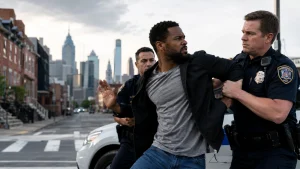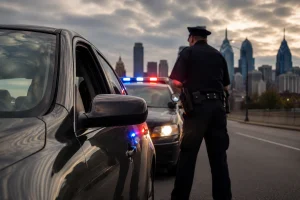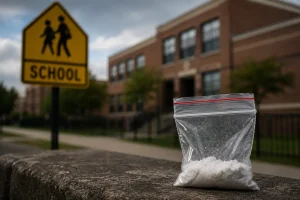
You were stopped a few blocks from a school, and now the paperwork says something about a “school zone.” Suddenly a drug charge you thought you understood feels heavier, and no one has told you plainly why. Where you were standing when police made contact should not change who you are or how frightened you feel right now, but under Pennsylvania law, that location can absolutely change what you are facing. Philadelphia is one of the most school-dense cities in the state, which means a huge share of the city sits inside one of these zones. As a former Philadelphia prosecutor who spent years building drug cases before switching sides, I have seen exactly how the Commonwealth uses proximity to a school to push for a harsher outcome. This article explains what a drug charge near a school in Philadelphia actually means, why the location makes things worse, and what an experienced defense can do about it.
What You’ll Learn
- What “drug charges near schools” means under Pennsylvania law
- The real reasons location makes your charges worse
- How to tell whether the school zone applies to your case
- Your defense options as a Philadelphia defendant
- Why defendants choose DiDonato & Burke
- Frequently asked questions
- Your next steps
What Are “Drug Charges Near Schools” in Philadelphia?
Pennsylvania has long treated drug offenses near schools more seriously than the same conduct somewhere else. The key statute is Section 6317 of the Pennsylvania Crimes Code, titled “Drug-free school zones.” It targets people 18 or older who deliver, or possess with intent to deliver, a controlled substance within 1,000 feet of a school, college, or university, or within 250 feet of a recreation center, playground, or a school bus. Note the phrase “with intent to deliver.” Simple possession for personal use is not what this zone rule is built around. It is aimed at what the Commonwealth argues is dealing. In practice, that distinction is often where the real fight begins.
This matters in Philadelphia more than almost anywhere. With hundreds of schools, colleges, playgrounds, and recreation centers packed across the city, a 1,000-foot radius around each one blankets enormous stretches of neighborhoods. Center City, South Philadelphia, North Philadelphia, and University City are especially saturated. Many people are inside a school zone without ever realizing it.
The Real Reasons Location Makes Your Charges Worse
Here is where most online explanations get it wrong, and where insider knowledge matters. Understanding why the school zone hurts you, and what has changed in the law, is the difference between panicking over a threat that no longer applies and preparing a defense against the one that does.
1. The old mandatory minimum, and why it no longer applies automatically
For years, Section 6317 carried a mandatory minimum of two years in state prison for a school-zone drug conviction, with a four-year maximum. A judge had no choice. That is the version of the law many people still find when they search online, and it is why the charge feels catastrophic.
But in 2015, the Pennsylvania Supreme Court struck down that mandatory minimum in Commonwealth v. Hopkins. The reason was constitutional. Following the U.S. Supreme Court’s decision in Alleyne v. United States, any fact that raises a mandatory minimum sentence has to be proven to a jury beyond a reasonable doubt, not decided by a judge afterward using a weaker standard. Pennsylvania’s school-zone law let a judge make that call at sentencing by a mere preponderance of the evidence, so the courts invalidated the mandatory two-year floor.
| Bottom line: The automatic two-year mandatory minimum for a school-zone drug conviction is no longer enforceable in Pennsylvania. If someone is telling you a conviction means an automatic two years, that information is out of date. |
2. Location still makes it worse — as a sentencing enhancement
This is the part defendants most often misunderstand. Losing the mandatory minimum did not make the school zone irrelevant. Proximity to a school still lives on inside Pennsylvania’s sentencing guidelines as an enhancement a judge can apply. Having prosecuted these cases, I can tell you the Commonwealth still raises the school zone at every opportunity, because it pushes the recommended sentencing range upward and gives the DA leverage in plea negotiations. The threat changed shape; it did not disappear.
3. The location changes how prosecutors frame the whole case
When I was on the other side, a school-zone fact was a storytelling tool as much as a sentencing one. Prosecutors use it to recast an ordinary possession situation as a danger to children, which colors how a judge and jury hear everything else. It also strengthens the “intent to deliver” theory, because the Commonwealth argues that dealing near a school shows exactly the conduct the legislature wanted to punish. That framing is powerful, and it is why the intent element has to be challenged early and hard.
4. Proving the zone is not as automatic as the DA suggests
The Commonwealth still has to prove the distance, and in Philadelphia that has historically meant an officer physically measuring the footage from where the alleged transaction happened to the edge of the zone. Those measurements can be wrong. The starting point can be disputed. What legally counts as a “school” is not always obvious. Because these facts now have to be established properly rather than assumed at sentencing, there is far more room to contest them than there was under the old law.
How to Tell Whether the School Zone Applies to Your Case
Read your charging documents carefully and look for these signals. They tell you how serious the school-zone exposure really is:
- A specific reference to 18 Pa.C.S. Section 6317 or the words “drug-free school zone.”
- A charge of possession with intent to deliver (PWID), not just simple possession — the zone rule is built around alleged dealing.
- A named school, college, university, playground, or recreation center listed as the reference point.
- A stated distance measurement, or a police report describing an officer measuring the footage.
If you see intent-to-deliver language plus a school-zone reference, treat the case as urgent and get experienced counsel involved immediately. If your charge is simple possession with no delivery allegation, the zone enhancement is far less likely to be the driving issue, though the underlying charge still needs a real defense.
Your Defense Options as a Philadelphia Defendant
What to do right now
- Say nothing about the case to anyone but your attorney. Not to police, not to family on a recorded jail line, not on social media.
- Do not consent to any further searches of your phone, car, or home.
- Write down everything you remember while it is fresh — where you were, who was present, what officers said and did.
- Call an experienced criminal defense attorney before your next court date.
What an experienced defense actually does
A serious school-zone defense works on several fronts at once. The first is the intent-to-deliver element, because if the Commonwealth cannot establish delivery or intent to deliver, the entire school-zone framework loses its footing. The second is the stop and search itself. Constitutional violations in how the drugs were found can lead to evidence being suppressed, and suppressed evidence often means a case that collapses. The third is the zone proof itself — the measurement, the reference point, and whether the location legally qualifies.
Why a former prosecutor’s perspective changes the defense
I spent years building drug cases for the Commonwealth before I ever defended one. I know how prosecutors decide when to add the school-zone allegation, how they use it to drive a plea, and where those cases tend to be weakest. When I sit across from the DA now, I am reading the same playbook I once ran. That insider view lets me press on the intent element, the search, and the zone proof in the order most likely to move the outcome, rather than treating the school zone as the settled fact the Commonwealth wants you to believe it is.
Why Philadelphia Defendants Choose DiDonato & Burke
For more than 30 years, Philadelphia residents have turned to DiDonato & Burke Law Firm when their freedom is on the line. Thomas F. Burke is a former Philadelphia prosecutor who now uses that insider knowledge to defend people facing everything from possession to homicide. Clients work directly with an experienced attorney, not a junior associate or a paralegal, because the firm stays intentionally small so every case gets real attention. That combination — prosecutorial insight, a track record that includes stunning acquittals and a $10 million civil rights verdict, and direct access to the attorney handling your case — is what “when winning matters most” actually looks like in practice.
Frequently Asked Questions
Is there still a mandatory minimum for drug charges near a school in Philadelphia?
No. Pennsylvania’s automatic two-year mandatory minimum for school-zone drug convictions was struck down as unconstitutional in Commonwealth v. Hopkins in 2015. School-zone proximity can still increase a sentence as a guideline enhancement, but a judge is no longer forced to impose an automatic minimum.
How close to a school counts as a school zone in Pennsylvania?
The law reaches conduct within 1,000 feet of a school, college, or university, and within 250 feet of a recreation center, playground, or school bus. In dense parts of Philadelphia, those overlapping zones cover large areas, so many people are inside one without knowing it.
Does the school zone apply to simple possession?
Generally no. The school-zone rule is built around delivery or possession with intent to deliver, not possession for personal use. If your charge is simple possession, the zone enhancement is much less likely to drive your case, though you still need a defense to the underlying charge.
How much does a criminal defense attorney cost in Philadelphia?
Cost depends on the charges, the complexity of the case, and whether it resolves early or goes to trial. DiDonato & Burke offers a free, confidential consultation so you can understand your exposure and options before making any financial commitment. Call (215) 567-1248.
Can a drug charge near a school be dismissed?
It can. Outcomes depend on the facts, but school-zone cases are often vulnerable on the intent-to-deliver element, on the legality of the stop and search, and on how the distance was measured. Each of those is a place an experienced attorney can attack the Commonwealth’s case.
What happens if police measured the distance wrong?
The measurement is something the Commonwealth has to prove, and it can be challenged. A disputed starting point, a flawed measurement, or a location that does not legally qualify as a school can all undercut the school-zone allegation.
Will I go to jail for a school-zone drug charge?
Not automatically. With the mandatory minimum gone, incarceration is no longer required by the zone alone. What actually happens turns on the charge, your record, the strength of the evidence, and the quality of your defense.
What is the benefit of hiring a former prosecutor?
A former prosecutor knows how the DA builds and values these cases from the inside — when the school zone gets added, how it is used to push a plea, and where the case is weakest. That perspective shapes a sharper, more strategic defense.
Your Next Steps
If you are facing a drug charge near a school in Philadelphia, remember three things:
- The old automatic two-year mandatory minimum no longer applies — but location can still increase your sentence.
- The intent-to-deliver element, the search, and the distance measurement are all defensible.
- Acting early, before your next court date, gives your attorney the most room to work.
Do not face these charges alone. Call DiDonato & Burke at (215) 567-1248 for a free, confidential consultation. A former Philadelphia prosecutor is ready to review your charges and explain your options. Serving Philadelphia and southeastern Pennsylvania, Monday through Friday, 8 AM to 8 PM.
About the Author
Thomas F. Burke is a former Philadelphia prosecutor and managing partner at DiDonato & Burke Law Firm. Drawing on more than 30 years in Philadelphia courtrooms and his experience building cases for the Commonwealth, he now defends clients facing charges from drug offenses to homicide, along with civil rights and police misconduct claims. Contact him at (215) 567-1248 for a free consultation.
This content provides general information about Pennsylvania criminal law and is not legal advice. Every case is unique and requires individual analysis. For specific legal advice about your situation, contact DiDonato & Burke Law Firmat (215) 567-1248 to schedule a free consultation. Past results do not guarantee future outcomes.