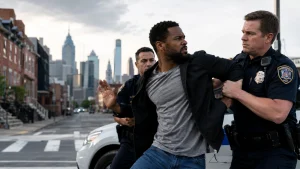
You were pulled over for something small—a broken taillight, rolling through a stop sign, tinted windows. Ten minutes later, you’re standing on the shoulder of I-95 watching an officer go through your car, and now you’re facing a criminal charge you never saw coming. If that’s where you are right now, your heart is probably racing and your mind is spinning: How did a traffic ticket turn into this? Am I going to jail? What do I do next?
You’re not alone. Across Philadelphia, ordinary drivers face this exact nightmare every single day. A minor traffic violation becomes the doorway to serious criminal charges in traffic stops—drug possession, gun charges, DUI. Here’s what most people don’t realize: a routine stop does not automatically give police the right to search you, question you, or charge you. As a former Philadelphia prosecutor who spent over a decade in the District Attorney’s Office, I built these cases from the inside. Below, I’ll explain exactly how a stop escalates, why the prosecution thinks it can win, and how the right defense dismantles their case.
What You’ll Learn
- What turns a routine traffic stop into a criminal case
- The real reasons these charges happen
- How to spot when police crossed a legal line
- Your options for fighting back
- Why Philadelphia drivers choose DiDonato & Burke
- Frequently asked questions
- What to do next
What Is a Traffic Stop That Leads to Criminal Charges?
A traffic stop starts as a civil matter—a violation of the Pennsylvania Vehicle Code. Speeding, an expired registration, a burned-out light. On its own, that’s a citation, not a crime. But a stop becomes a criminal case the moment an officer claims to discover evidence of something more: drugs, a firearm, signs of intoxication, or an outstanding warrant.
In Philadelphia, the most common charges that grow out of traffic stops are DUI, drug possession, and illegal firearm possession (often charged as VUFA—Violation of the Uniform Firearms Act). What began as a two-minute stop can end with handcuffs, an arrest, and a court date carrying the possibility of jail time and a permanent record.
The critical point is this: an officer needs a specific legal reason to pull you over, and a separate legal reason to search your vehicle or arrest you. When police skip those steps, the resulting charges may not survive a challenge in court.
The Real Causes Behind These Charges
Having prosecuted hundreds of these cases, I can tell you that traffic-stop charges almost always trace back to a handful of predictable causes. Understanding which one applies to you is the first step in building a defense.
The Pretextual Stop
Sometimes the traffic violation is real but minor, and it’s really just an excuse. Officers looking for drugs or guns will follow a car until the driver commits any small infraction, then use that as a reason to stop and investigate. Pennsylvania law requires an officer to point to specific, articulable facts justifying the stop. When I was prosecuting, we relied on officers being able to clearly explain why they stopped a driver. If that explanation is vague or contradicted by dashcam footage, the entire stop can collapse—and everything found afterward goes with it.
The Prolonged Stop
This is one of the most common—and most beatable—problems I see. Under the U.S. Supreme Court’s decision in Rodriguez v. United States (2015), police cannot extend a stop beyond the time reasonably needed to handle the original violation. Once the officer has your license and registration and is writing the ticket, the clock is running. If they hold you longer to wait for a K-9 unit, run extra questioning, or dig for a reason to search—without independent reasonable suspicion—that extension is unconstitutional. Prosecutors know this is a weak point, which is exactly why they’ll try to gloss over the timeline.
The Questionable Search
Here’s where Pennsylvania protects drivers more than most states realize. In Commonwealth v. Alexander (2020), the Pennsylvania Supreme Court ruled that police need both probable cause AND exigent circumstances to search your vehicle without a warrant or your consent. Probable cause alone is not enough. That’s a higher bar than federal law. And the smell of marijuana by itself no longer automatically justifies a search—under Commonwealth v. Barr, odor can be one factor, but it can’t stand alone. When I review a traffic-stop case, the search is often where the prosecution’s case falls apart.
The “Plain View” Claim
Officers frequently justify a seizure by saying contraband was in “plain view.” Pennsylvania courts still recognize this doctrine—Commonwealth v. Saunders (2024) confirmed it—but it has strict limits. The officer must have been lawfully positioned, and the item’s incriminating nature must be immediately obvious. The defense question is always the same: was it truly visible, or did police search first and call it plain view afterward? Body camera footage often tells a very different story than the police report.
How to Identify a Problem in Your Case
You don’t need a law degree to spot the warning signs that police may have overstepped. Ask yourself:
- Why were you stopped? If the officer struggled to explain the violation—or cited something you didn’t do—the stop itself may be challengeable.
- How long did it last? Were you held well past the point where the officer could have simply written a ticket? Delays waiting for backup or a drug dog are red flags.
- Did you consent? You are never required to consent to a search. If you said no and they searched anyway, that matters enormously.
- Where was the “evidence” found? Something in a locked glovebox, trunk, or closed container is very different from something an officer could plainly see.
If any of these apply, your case deserves a close look from an experienced defense attorney—the sooner the better, while footage and records still exist.
Solution Options for Philadelphia Drivers
What to Do Right Now
- Stay silent. You are only required to provide your license, registration, and insurance. Beyond that, politely decline to answer questions. Say clearly: “I don’t consent to any searches, and I want to speak with a lawyer.”
- Don’t resist. Even if you know the stop is unlawful, never physically resist. Resisting is a separate crime in Pennsylvania that only complicates your case. Fight it in court, not on the roadside.
- Write it all down. As soon as you can, record everything you remember—the time, what was said, how long it lasted, whether you consented. Details fade fast, and they can win a case.
What an Experienced Defense Attorney Does
A serious defense goes well beyond showing up to court. It means obtaining and scrutinizing dashcam and body camera footage, subpoenaing dispatch and stop-timing records, and filing a motion to suppress when the stop or search violated your rights. If that motion succeeds, the illegally obtained evidence is thrown out—and without it, the Commonwealth’s case often cannot stand.
Why a Former Prosecutor Makes the Difference
I spent over ten years building cases exactly like the one being used against you. I know the shortcuts officers take, the phrases they use to paper over a bad search, and where prosecutors quietly hope you won’t look. I use that insider knowledge to attack the weak points the other side is counting on you to miss.
Why Philadelphia Drivers Choose DiDonato & Burke
For over 30 years, DiDonato & Burke Law Firm has defended the rights of Philadelphia drivers and residents. Attorney Thomas F. Burke is a former Philadelphia homicide prosecutor who personally tried more than 400 jury trials before switching sides to defend the accused. That background is the firm’s edge: he knows how the DA’s office thinks because he was the DA’s office.
When you hire DiDonato & Burke, you work directly with Thomas Burke—not a junior associate or a paralegal. The firm is intentionally small so every client gets personal attention and an aggressive, hands-on defense. Courts recognize and prosecutors respect that reputation. When winning matters most, that difference can mean the difference between a conviction and a dismissal.
Frequently Asked Questions
Can police search my car in Pennsylvania after a routine traffic stop? Not automatically. Since Commonwealth v. Alexander, Pennsylvania police generally need both probable cause and exigent circumstances—or your consent—before searching your vehicle without a warrant. A stop for a broken taillight or expired tags does not, by itself, create the right to search your car.
Do I have to consent to a search of my vehicle? No. You have the right to refuse. Politely say, “Officer, I do not consent to a search.” Refusing is not an admission of guilt, and it cannot be used against you. If police search anyway without legal justification, your attorney may be able to suppress whatever they find.
How long can police keep me at a traffic stop? Only as long as reasonably needed to address the original violation. Under Rodriguez v. United States, officers cannot prolong the stop to investigate unrelated matters or wait for a drug dog without separate reasonable suspicion. An unlawfully extended stop can be grounds to challenge the charges.
Can charges from a traffic stop be dismissed? Yes. If the stop, the prolonged detention, or the search violated your constitutional rights, a successful motion to suppress can result in the evidence being thrown out—and charges are frequently dismissed when the key evidence disappears. Every case turns on its specific facts.
What should I do immediately after being charged? Stop talking about your case with anyone except a lawyer—no phone calls, no social media, no explaining yourself to police. Write down everything you remember about the stop, and contact an experienced criminal defense attorney as soon as possible while evidence is still fresh.
Does the smell of marijuana let police search my whole car? Not on its own. Under Commonwealth v. Barr, the odor of marijuana can be one factor in the analysis, but it is no longer a stand-alone justification for a warrantless search in Pennsylvania. An officer who says only “I smelled marijuana, so I searched” may have a real legal problem.
How much does a criminal defense attorney cost in Philadelphia? Fees vary depending on the charges and complexity of the case. DiDonato & Burke offers a free consultation to review your situation, explain your options, and discuss cost before you commit to anything—so you can make an informed decision with no pressure.
What makes a former prosecutor a better defense attorney? A former prosecutor knows exactly how the other side builds and argues these cases—what evidence they prioritize, where their proof is thin, and which weaknesses they try to hide. Thomas Burke uses a decade of prosecutorial experience to anticipate and counter the DA’s every move.
Next Steps
If a routine traffic stop turned into criminal charges, remember:
- A minor traffic violation does not automatically give police the right to search or charge you.
- Pennsylvania law protects drivers more strongly than most people realize.
- The stop, the detention, and the search can each be challenged—and often are.
- The sooner you act, the more evidence your attorney can preserve.
Don’t face these charges alone. Call DiDonato & Burke at (215) 567-1248 for a free, confidential consultation. When you reach out, you’ll speak with a former Philadelphia prosecutor ready to fight for your freedom. Serving Philadelphia and southeastern Pennsylvania. Mon–Fri 8AM–8PM.
About the Author
Thomas F. Burke is a former Philadelphia homicide prosecutor and managing partner at DiDonato & Burke Law Firm. During his 10+ years in the Philadelphia District Attorney’s Office, Mr. Burke tried over 400 jury trials and became one of the youngest prosecutors in the elite homicide unit. Since 2003, he has used his prosecutorial experience to defend clients facing charges from misdemeanors to murder. Contact him at (215) 567-1248 for a free consultation.
This content provides general information about Pennsylvania criminal law and is not legal advice. Every case is unique and requires individual analysis. For specific legal advice about your situation, contact DiDonato & Burke Law Firm at (215) 567-1248 to schedule a free consultation. Past results do not guarantee future outcomes.