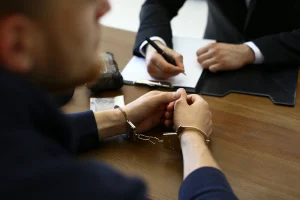
You lost your temper and kicked a car door. Or a night out in Fishtown ended with a broken window and a police report. Maybe your ex says you smashed her phone during an argument. Now you’re facing criminal mischief charges in Philadelphia, and you’re wondering how something that felt minor turned into a criminal case.
Here’s the short answer. In Pennsylvania, criminal mischief can be anything from a summary offense to a third-degree felony. The dollar amount of the damage usually decides which one, and that number often comes from an estimate the property owner gave police that nobody has tested yet.
At DiDonato & Burke Law Firm, Thomas F. Burke spent more than 10 years as a Philadelphia prosecutor before he started defending people. He knows how these cases get built, and where they tend to fall apart.
What You’ll Learn
- What criminal mischief charges are in Pennsylvania
- How the damage amount sets your penalties
- How prosecutors build these cases
- How we defend them
- What to do right now
- Answers to common questions
What Are Criminal Mischief Charges in Pennsylvania?
Criminal mischief is Pennsylvania’s main property damage law, found at 18 Pa.C.S. § 3304. Most people just call it vandalism. You can be charged if you:
- Intentionally damage someone else’s property
- Intentionally or recklessly tamper with someone’s property in a way that puts people or property in danger
- Damage property with fire, explosives, or other dangerous means, even through carelessness
- Deface property with graffiti using spray paint or a broad-tipped marker
- Deface property with a paintball gun
- Cause someone a financial loss through deception or threats
In Philadelphia, these property damage charges come from all kinds of situations: a broken phone or TV during a fight at home, a scuffle outside an Old City bar, a keyed car after a parking dispute, or graffiti on a wall in Kensington. They rarely come alone. Prosecutors often add simple assault, harassment, or trespass to the same complaint.
Criminal Mischief Penalties in Pennsylvania
The grade of the charge depends mostly on the “pecuniary loss,” meaning the dollar value of the damage.
| Grade | When It Applies | Maximum Penalty |
| Felony of the third degree (F3) | Intentional damage over $5,000, or a substantial disruption of utilities, transportation, or public communication | Up to 7 years and $15,000 |
| Misdemeanor of the second degree (M2) | Intentional damage over $1,000 | Up to 2 years and $5,000 |
| Misdemeanor of the third degree (M3) | Intentional or reckless damage over $500, or graffiti damage over $150 | Up to 1 year and $2,500 |
| Summary offense | Everything else | Up to 90 days and $300 |
Pennsylvania law also requires the court to order restitution when property is damaged. For many first-time defendants, paying the owner back becomes a bigger issue than jail.
Notice the word “intentional” in the two highest grades. Reckless damage tops out at an M3. Damage to churches, schools, cemeteries, and memorials can be charged separately as institutional vandalism under § 3307, which starts at an M2.
How Prosecutors Build Criminal Mischief Charges in Philadelphia
The damage number comes from the alleged victim
When Thomas Burke was prosecuting cases in Philadelphia, the damage figure in a criminal mischief file usually came from one source: the property owner. Sometimes it was a body shop estimate. Sometimes it was a number someone gave an officer at the scene. That figure goes into the paperwork, and the charge is graded from it. Replacing a whole door instead of repairing it, or pricing a new phone instead of the value of a two-year-old one, can push a case over the next dollar line fast.
Intent gets assumed from the result
The higher grades require proof that you meant to cause the damage. In practice, prosecutors often argue intent from the damage itself. But clipping a mirror on a narrow South Philly street, or slamming a door during an argument, is not the same as setting out to destroy something.
Domestic calls raise the stakes
On domestic calls, Philadelphia police often charge first and sort it out later. A broken phone can come with a stay-away order as a bail condition, which may keep you out of your own home. Ownership also matters here, because the law requires damage to property “of another.” Shared phones, cars, and furniture can make that harder to prove than police assume.
A grading question now before the Pennsylvania Supreme Court
On July 13, 2026, the Pennsylvania Supreme Court agreed to hear Commonwealth v. Griggs. The Court will decide whether criminal mischief is graded by the defendant’s intent to cause a loss of a certain amount, or simply by how much loss actually happened. The answer could change how felony and misdemeanor criminal mischief charges are graded statewide. Until the Court rules, it is an issue your defense lawyer should be raising.
How We Defend Against Criminal Mischief Charges
We challenge the dollar amount. The Commonwealth has to prove the loss. We look at inflated estimates, damage that was already there, and cheaper repairs that would do the job. Moving an alleged $1,200 loss under $1,000 drops an M2 to an M3. Getting it under $500 can make it a summary offense.
We challenge intent. Accidents are not crimes, and reckless conduct cannot support the higher grades.
We challenge identification. Graffiti and vandalism cases often rest on grainy video or a neighbor’s guess. We move quickly to get business, SEPTA, and doorbell camera footage before it is recorded over.
We challenge ownership. If the property is yours, or ownership is unclear, the case may not hold up.
We pursue diversion when it fits. Many first-time cases in Philadelphia can be resolved through ARD or the Accelerated Misdemeanor Program, which can end in dismissal. Restitution is usually part of the deal, and how that amount gets negotiated matters.
What to Do Right Now
- Do not explain what happened to police without a lawyer.
- Do not text or call the property owner. Apologies and offers to pay can end up in the prosecutor’s file.
- Follow every bail condition, especially stay-away orders.
- Save your evidence: photos, receipts showing ownership, texts, and witness names.
- Write down what happened while it is fresh, and share it only with your lawyer.
- Call a defense attorney before your first court date.
Why Philadelphia Defendants Choose DiDonato & Burke
Thomas Burke tried more than 400 jury trials as a Philadelphia prosecutor, including time in the elite homicide unit. He has seen how a damage estimate turns into a felony charge, because he used to work on the other side of these files. Today, DiDonato & Burke brings 30+ years of experience to people across Philadelphia.
You work directly with Thomas Burke, not a junior associate. Our results include an acquittal in under 30 minutes for a man falsely accused by police, followed by a $10 million civil rights verdict, and ARD for a nurse charged with assault who kept her license. When winning matters most, you want a lawyer courts recognize and prosecutors respect.
Frequently Asked Questions
Is criminal mischief a felony in Pennsylvania? It can be. Criminal mischief is a third-degree felony when someone intentionally causes more than $5,000 in damage or seriously disrupts a public utility or service. Most cases are graded as misdemeanors or summary offenses.
What is the difference between criminal mischief and vandalism? In Pennsylvania, they are mostly the same thing. “Vandalism” is the everyday word. Criminal mischief is the legal charge. Damage to places of worship, schools, or cemeteries may be charged as institutional vandalism.
Will I go to jail for criminal mischief in Philadelphia? Jail is possible, but many first-time cases end without it. The outcome depends on the grade, your record, restitution, and how the case is defended. Every case is different, so we cannot promise a result.
Do I have to pay for the damage? If you are convicted, the court must order restitution to the owner. The amount can be challenged, and it is often negotiated as part of a diversion program or plea.
Can criminal mischief charges be dropped? Yes. Charges can be withdrawn or dismissed when the evidence is weak, the damage amount cannot be proven, or the case is resolved through diversion.
Can I get ARD for criminal mischief? Often, yes, especially for first offenses. ARD is up to the District Attorney’s Office, and completing it can lead to dismissal. Philadelphia also offers other diversion options for some misdemeanors.
How much does a criminal mischief lawyer cost in Philadelphia? Fees depend on the grade of the charge, whether there are other charges, and whether the case goes to trial. We explain costs clearly during your free consultation, before you commit to anything.
Will a criminal mischief conviction show up on background checks? Yes, a conviction can appear on background checks. Pennsylvania’s Clean Slate law can automatically seal some summary and misdemeanor convictions after a waiting period without new convictions. Avoiding a conviction is still the best protection.
Talk to a Philadelphia Criminal Mischief Lawyer Today
Criminal mischief charges can feel minor until you see the penalties and the restitution bill. The damage number in your file is not the final word. It can be tested, and often it should be.
Call DiDonato & Burke Law Firm at (215) 567-1248 for a free consultation, or reach us online. Our Philadelphia office at Two Penn Center is open Monday through Friday, 8AM to 8PM, with weekend appointments available.
About the Author Thomas F. Burke is a former Philadelphia homicide prosecutor and managing partner at DiDonato & Burke Law Firm. During more than 10 years in the Philadelphia District Attorney’s Office, he tried over 400 jury trials and became one of the youngest prosecutors in the elite homicide unit. He now uses that experience to defend people facing charges from summary offenses to murder. Call (215) 567-1248 for a free consultation.
This content provides general information about Pennsylvania criminal law and is not legal advice. Every case is unique and requires individual analysis. For specific legal advice about your situation, contact DiDonato & Burke Law Firm at (215) 567-1248 to schedule a free consultation. Past results do not guarantee future outcomes.