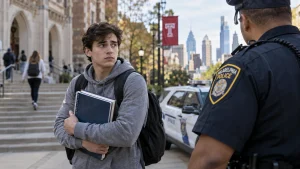
One night can change everything. Maybe it was a party near Temple, a fight outside a bar in University City, or a traffic stop on the way back to campus. Now you have a court date, a phone full of messages, and one big question: what happens to school? College student criminal defense in Philadelphia is about more than the charge itself. A conviction can follow you into campus discipline, housing, internships, graduate school, and your first job. The good news is that most student cases can be handled in ways that protect your future, if you act quickly and carefully. At DiDonato & Burke Law Firm, Thomas Burke spent more than 10 years as a Philadelphia prosecutor. He knows how these cases are built, and we use that knowledge to protect students.
What You’ll Learn
- What Happens When a College Student Is Arrested in Philadelphia
- Why Student Cases Become So Serious
- Signs Your Case Needs Immediate Attention
- College Student Criminal Defense Solutions
- Why Philadelphia Families Choose DiDonato & Burke
- Frequently Asked Questions
- Next Steps
What Happens When a College Student Is Arrested in Philadelphia?
Philadelphia is home to Temple, Penn, Drexel, La Salle, Saint Joseph’s, Jefferson, and Community College of Philadelphia. Temple, Penn, and Drexel all have their own police departments that work alongside the Philadelphia Police Department. That means more officers, more patrols, and more arrests near campus.
The most common charges we see for college students include:
- Underage drinking (18 Pa.C.S. § 6308). A summary offense with a fine of up to $500 for a first offense and up to $1,000 after that. Since April 2019, Pennsylvania no longer suspends your driver’s license for this charge.
- Misrepresenting your age (§ 6307) or carrying a fake ID (§ 6310.3). A first offense for misrepresenting your age is a summary offense, but a second becomes a misdemeanor.
- Marijuana possession. Recreational marijuana is still illegal in Pennsylvania as of this writing. Philadelphia treats small amounts as a civil fine, but you can still be charged under state law.
- DUI. Drivers under 21 can be charged with a BAC as low as .02% under 75 Pa.C.S. § 3802(e).
- Simple assault, disorderly conduct, and retail theft.
- Drug delivery. Sharing prescription pills like Adderall can be charged as a felony.
Why Student Cases Become So Serious
You Are Facing Two Cases, Not One
Your criminal case moves through Philadelphia Municipal Court or the Court of Common Pleas. Your school runs its own conduct process on a separate track. Schools usually use a lower standard of proof than criminal courts, and many can discipline you for conduct that happened off campus. A student can win in court and still be suspended, lose housing, or lose a scholarship.
Your Own Words Become the Evidence
When Thomas Burke was a prosecutor, some of the strongest evidence in many cases came from the defendant’s own mouth. Students talk. They explain themselves to campus police, resident advisors, conduct officers, and group chats. None of those conversations are protected the way talks with your lawyer are. Statements made at a school hearing can end up in the hands of police or prosecutors.
Small Incidents Get Stacked Into Big Charges
Prosecutors rarely file one charge when they can file three. A shoving match outside a bar can become simple assault, recklessly endangering another person, and disorderly conduct. Giving a roommate a few Adderall pills can be charged as delivery of a controlled substance, even when no money changed hands. Stacked charges give the prosecution leverage to push you toward a guilty plea.
The Record Hurts More Than the Sentence
For first-time, low-level cases, jail is rarely the real risk. The record is. Under Pennsylvania’s Clean Slate law, many misdemeanor convictions can’t be sealed until you go 7 years without another conviction. Summary convictions are sealed after 5 years. Even sealed records stay visible to licensing agencies. Many law schools, medical schools, and licensing boards ask about any arrest, not just convictions.
There is some good news. Under the FAFSA Simplification Act, drug convictions no longer affect eligibility for most federal student aid. However, your school’s own scholarships, housing contracts, and athletic programs may have stricter rules. International students face a separate risk because certain convictions can affect visa status.
Signs Your Case Needs Immediate Attention
Look at your charging paperwork. Each charge has a grade: S (summary), M3, M2, M1 (misdemeanors), or F (felony). Call a defense attorney right away if any of these apply:
- You are charged with a misdemeanor or felony, not just a citation
- The case involves drugs beyond a small amount of marijuana
- There is an assault or sexual misconduct allegation
- You received a letter from your school’s student conduct office
- You are an international student
- You plan to attend graduate school or work in nursing, teaching, law, medicine, or finance
- You already gave a statement to police
The best time to call is before your school hearing and before your preliminary hearing.
College Student Criminal Defense Solutions That Protect Your Future
What to Do Right Now
- Stay silent. Politely tell police you want to speak with a lawyer.
- Stay off social media. Don’t post, text, or joke about the arrest.
- Talk to a lawyer before your school hearing. Ask the conduct office about your right to bring an advisor.
- Save evidence. Keep texts, photos, receipts, and witness names. Bar and store cameras often record over footage within days.
- Write down what happened while your memory is fresh.
- Never miss a court date. A missed date can lead to a bench warrant.
How Our Defense Strategy Works
We challenge the stop and the search. Pennsylvania’s Constitution gives stronger privacy protection than federal law in many situations. If police searched your car, backpack, or dorm room without a valid reason, the evidence may be thrown out.
We push for diversion. Philadelphia’s Accelerated Misdemeanor Program (AMP) lets people charged with certain low-level, non-violent offenses complete community service or treatment and have their charges dismissed. The program expanded in April 2026 to five sites across the city. For more serious first offenses, including many DUIs, Accelerated Rehabilitative Disposition (ARD) can lead to dismissal and expungement.
We negotiate smarter outcomes. Reducing a misdemeanor to a summary offense can mean a shorter path to a clean record.
We coordinate with your school case. We help you prepare so nothing you say on campus hurts you in court.
We go to trial when it makes sense. Some cases should not be pleaded out.
A former prosecutor knows which cases the DA’s Office wants to resolve and where their evidence is weak. That insight shapes every decision we make.
Why Philadelphia Students and Families Choose DiDonato & Burke
For 30+ years, DiDonato & Burke Law Firm has defended people across Philadelphia. Thomas Burke tried over 400 jury trials as a prosecutor, including in the DA’s elite homicide unit. Today, he uses that experience for the defense.
We are an intentionally small firm. When you hire us, you work directly with Thomas Burke, not a junior associate. Our past results include a nurse charged with assault who received ARD and kept her professional license, a client found not guilty in under an hour, and a case where over 500 grams of evidence was thrown out after an illegal search. Past results do not guarantee future outcomes, but they show how we fight.
Our office at Two Penn Center is a short trip from Temple, Penn, and Drexel. Courts recognize and prosecutors respect our work. When winning matters most, students and parents call us.
Frequently Asked Questions
Will my college find out about my arrest in Philadelphia? Possibly. Campus police often share reports with student conduct offices, and some schools require students to self-report arrests. Check your student code of conduct. Before you report anything or answer questions, talk with a criminal defense attorney about what to say.
Can I be suspended or expelled for an off-campus arrest? Yes. Many schools can discipline students for off-campus conduct, and the school process is separate from court. Outcomes range from a warning to expulsion. Having a lawyer guide you through both processes lowers the risk that one case damages the other.
Will a criminal charge affect my financial aid? Drug convictions no longer affect eligibility for most federal student aid under the FAFSA Simplification Act. However, school scholarships, athletic aid, and state programs may have their own rules. Review your award terms and speak with an attorney before your case resolves.
What is AMP, and can a college student qualify? AMP is Philadelphia’s Accelerated Misdemeanor Program. It is for people charged with certain low-level, non-violent offenses who have little or no criminal history. After completing community service or other requirements, the charges are dismissed. Many first-time student cases are strong candidates.
Should I talk to my school before I talk to a lawyer? No. What you say in a school meeting is not confidential and could reach police or prosecutors. Contact a defense attorney first, then ask your school about bringing an advisor. Many schools allow requests to reschedule a meeting.
How much does a college student criminal defense attorney cost in Philadelphia? Cost depends on the charge, the court, and whether the case goes to trial. A summary citation costs far less than a felony case. DiDonato & Burke offers a free consultation and gives you a clear fee quote before you commit.
Can an arrest be removed from my record? Often, yes. Cases that end in dismissal, acquittal, or completion of ARD can usually be expunged. Non-conviction records are also sealed automatically under Pennsylvania’s Clean Slate law. Convictions are harder to clear, which is why fighting the charge early matters.
Can campus police search my dorm room? Housing contracts often let staff enter rooms for health and safety checks. A police search for evidence generally requires a warrant, your consent, or a specific legal exception. If your room was searched, an attorney can review whether the evidence can be challenged.
Next Steps
- Stay silent and save evidence
- Talk to a lawyer before any school hearing
- Ask whether AMP or ARD fits your case
- Protect your record, not just your sentence
A single arrest does not have to define your future. Call DiDonato & Burke Law Firm at (215) 567-1248 for a free, confidential consultation. We are available Monday through Friday, 8 AM to 8 PM, with weekend appointments available.
About the Author Thomas F. Burke is a former Philadelphia homicide prosecutor and managing partner at DiDonato & Burke Law Firm. During more than 10 years in the Philadelphia District Attorney’s Office, he tried over 400 jury trials and became one of the youngest prosecutors in the elite homicide unit. He now defends clients facing charges from misdemeanors to murder. Contact him at (215) 567-1248 for a free consultation.
This content provides general information about Pennsylvania criminal law and is not legal advice. Every case is unique and requires individual analysis. For specific legal advice about your situation, contact DiDonato & Burke Law Firm at (215) 567-1248 to schedule a free consultation. Past results do not guarantee future outcomes.