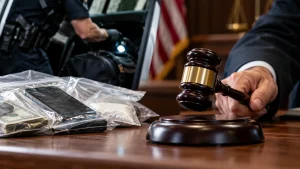
If Philadelphia police searched you, your car, or your home without the legal right to do it, that illegal search and seizure may be the strongest part of your defense.
Maybe an officer pulled you over for tinted windows and ended up digging through your trunk. Maybe police walked into your apartment without a warrant. Now you’re facing charges, and the evidence feels like it seals your fate.
It might not. In Pennsylvania, a judge can throw out evidence police got illegally. We do that through a motion to suppress evidence. Without that evidence, many cases fall apart.
Thomas Burke spent more than 10 years as a Philadelphia prosecutor before he started defending people. He has seen suppression hearings from the prosecution’s table and knows where these searches go wrong. This guide explains what makes a search illegal, why it happens, and how DiDonato & Burke Law Firm uses it to protect you.
What You’ll Learn
- What counts as an illegal search and seizure in Pennsylvania
- Why illegal searches happen
- How to spot problems in your case
- How we get evidence thrown out
- What to do right now
- Frequently asked questions
What Counts as an Illegal Search and Seizure in Pennsylvania?
Two sets of rules protect you. The Fourth Amendment bans unreasonable searches and seizures. Article I, Section 8 of the Pennsylvania Constitution goes further. Pennsylvania courts have long held that our state constitution puts a stronger focus on personal privacy.
That difference shows up in real cases:
- Car searches: In Commonwealth v. Alexander (2020), the Pennsylvania Supreme Court ruled that police need both probable cause and exigent circumstances (a real emergency) to search a car without a warrant. Federal law only requires probable cause. Alexander is still the law in Pennsylvania.
- No “good faith” excuse: Since Commonwealth v. Edmunds (1991), Pennsylvania courts won’t save illegally obtained evidence just because officers believed they were following the rules.
- Marijuana odor: In Commonwealth v. Barr (2021), the court held that the smell of marijuana alone isn’t enough to search a car, because many Pennsylvanians use medical marijuana legally.
- Carrying a gun: In Commonwealth v. Hicks (2019), the court ruled that seeing someone with a concealed gun does not, by itself, justify a stop.
In plain terms, a search is usually illegal in one of three situations. Police had no warrant and no valid exception. The warrant was defective. Or the stop that led to the search was never justified.
Why Illegal Searches Happen: What a Former Prosecutor Sees
In the Philadelphia DA’s Office, Thomas Burke learned that most suppression fights come down to one question: does the officer’s story hold together? These are the problems we find most often.
1. The Stop Was Never Legal
Every search starts with a stop. Police need reasonable suspicion to detain you and probable cause to arrest you. A hunch, an anonymous tip, or a “high crime area” alone usually isn’t enough. If the stop was illegal, everything found afterward can be challenged as “fruit of the poisonous tree.”
2. Police Stretch the Exceptions
Most warrantless searches rely on an exception, such as consent, plain view, a search after arrest, an emergency, or an inventory of an impounded car. In Commonwealth v. Saunders (2024), the Pennsylvania Supreme Court ruled that police may seize a gun sitting in plain view inside a lawfully stopped car. Two conditions still apply, though. The stop has to be lawful, and the item has to be in plain view. When an officer claims “plain view” for something found under a seat or inside a closed bag, the story often falls apart.
3. “Consent” That Wasn’t Voluntary
Officers often ask, “You don’t mind if I take a look, right?” Many people say yes because they feel they have no choice. Consent has to be voluntary. If police held your license, surrounded you, or kept you long after the traffic issue ended, that consent can be challenged.
4. Weak Warrants
A warrant is only as strong as the affidavit behind it. Stale information, unreliable informants, and copy-and-paste language can sink a warrant. So can a search that goes beyond what the warrant allowed.
What Prosecutors Know
Prosecutors read police reports looking for holes before the defense does. They know that body cam footage, radio calls, and stop times can contradict what an officer wrote.
They also know who carries the burden. Under Pennsylvania Rule of Criminal Procedure 581, it falls on the Commonwealth at a suppression hearing. The prosecutor has to prove the search was legal. You don’t have to prove it wasn’t.
How to Spot Problems With the Search in Your Case
Ask yourself:
- Did police show a warrant, or did they just start searching?
- What reason did they give for stopping you, and does it make sense?
- Did you agree to the search, or were you told it was happening?
- Was the evidence out in the open, or hidden?
- Were there cameras nearby, such as body cams, doorbell cameras, or store video?
If any answer gives you pause, talk to a defense attorney before your preliminary hearing. Video gets recorded over, and memories fade.
How We Get Evidence Thrown Out With a Motion to Suppress Evidence
A motion to suppress evidence asks a judge to bar the prosecution from using evidence obtained through an unlawful search and seizure. In Philadelphia, it’s usually filed as part of an omnibus pretrial motion in the Court of Common Pleas. The judge then holds a hearing where the officer has to testify.
Here’s how DiDonato & Burke builds that motion:
- Get the video fast. We request body cam, dashcam, 911 calls, radio logs, and nearby surveillance before it’s gone.
- Compare the report to the facts. Timelines, GPS data, and dispatch records often don’t match what the officer wrote.
- Apply the right law. We test every step police took against Alexander, Barr, Hicks, and other Pennsylvania cases.
- Cross-examine the officer. A suppression hearing is often the first time an officer explains the search under oath. Thomas Burke tried over 400 jury trials as a prosecutor. He knows which questions expose a shaky search.
- Turn the ruling into leverage. Even when a judge throws out only part of the evidence, the case can weaken enough to lead to a dismissal or a much better offer.
In one case, a judge in Allentown dismissed charges after Burke showed police had searched his client’s car illegally. More than 500 grams of drugs were thrown out. Past results don’t guarantee future outcomes, but they show what a careful challenge can do.
Federal cases in the Eastern District of Pennsylvania work differently. Federal courts follow only the Fourth Amendment and allow a good faith exception, so the strategy changes. We handle both.
What to Do Right Now: Your Action Checklist
- Don’t consent to any search. Say calmly, “I do not consent to a search.”
- Don’t physically resist, even if you believe the search is illegal.
- Stay silent and ask for a lawyer.
- Write down the time, place, officer names or badge numbers, and what was said.
- Note any cameras nearby.
- Stay off social media about your arrest.
- Call a defense attorney before your preliminary hearing.
Why Philadelphia Defendants Choose DiDonato & Burke
For 30+ years, DiDonato & Burke Law Firm has defended people across Philadelphia. Clients choose us for four reasons:
- A former Philadelphia prosecutor. Thomas Burke spent 10+ years in the DA’s Office, including the elite homicide unit.
- 400+ jury trials. All of them tried personally by Thomas Burke.
- Direct attorney access. You work with Thomas Burke, with no handoffs to junior staff.
- Criminal defense and civil rights under one roof. If police violated your rights, we can fight your charges and pursue a civil rights claim. Our $10 million verdict for a client falsely accused by police shows how far we’ll go.
We stay intentionally small so every client gets real attention from a lawyer courts recognize and prosecutors respect.
Frequently Asked Questions
What is an illegal search and seizure in Pennsylvania? It’s a search or seizure that violates the Fourth Amendment or Article I, Section 8 of the Pennsylvania Constitution. It usually means police searched without a warrant or valid exception, used a defective warrant, or searched after an illegal stop.
How does a motion to suppress evidence work in Philadelphia? Your attorney files the motion before trial, explaining why the search was illegal. The judge holds a hearing where police testify, and the Commonwealth must prove the search was lawful. If the judge agrees with the defense, the evidence can’t be used against you.
Can police search my car without a warrant in Pennsylvania? Usually not. Under Commonwealth v. Alexander, police need both probable cause and exigent circumstances. Exceptions include consent, items in plain view, and inventory searches of impounded cars. Whether an exception truly applied is often the main fight.
Can police search my car just because they smell marijuana? Not on smell alone. In Commonwealth v. Barr, the Pennsylvania Supreme Court said marijuana odor can be one factor, but it isn’t enough by itself to establish probable cause. Police need other facts pointing to a crime.
Can police search my phone without a warrant? Generally, no. In Riley v. California (2014), the U.S. Supreme Court ruled that police usually need a warrant to search a phone’s contents. Data you share with companies is treated differently. In December 2025, Pennsylvania’s Supreme Court upheld a warrant for Google search records in Commonwealth v. Kurtz.
What happens if the judge suppresses the evidence? The prosecution can’t use it at trial. If that evidence was the heart of the case, such as drugs or a gun, charges are often withdrawn or dismissed. The Commonwealth can appeal the ruling, but your position is much stronger.
How much does it cost to challenge an illegal search in Philadelphia? Cost depends on the charges, how much evidence needs review, and whether the case goes to trial. We explain our fees clearly at your free consultation, before you commit to anything.
Can I sue the police for an unlawful search and seizure? Possibly. Federal law (42 U.S.C. § 1983) lets people sue officers who violate their constitutional rights. These claims generally must be filed within two years in Pennsylvania. DiDonato & Burke handles both the criminal caseand the civil rights claim.
Next Steps
An illegal search can change everything about your case. Remember these three points:
- Pennsylvania gives you stronger search protections than federal law.
- The prosecution must prove the search was legal.
- Video and records disappear fast, so act early.
When winning matters most, call DiDonato & Burke Law Firm at (215) 567-1248 for a free consultation, or contact us online. You’ll talk about your case directly with Thomas Burke. Our office is at Two Penn Center in Philadelphia, open Monday through Friday, 8 AM to 8 PM, with weekends by appointment.
About the Author
Thomas F. Burke is a former Philadelphia homicide prosecutor and managing partner at DiDonato & Burke Law Firm. During more than 10 years in the Philadelphia District Attorney’s Office, he tried over 400 jury trials and became one of the youngest prosecutors in the elite homicide unit. He now defends people facing charges from misdemeanors to murder in Pennsylvania, New Jersey, and federal courts.
This content provides general information about Pennsylvania criminal law and is not legal advice. Every case is unique and requires individual analysis. For specific legal advice about your situation, contact DiDonato & Burke Law Firm at (215) 567-1248 to schedule a free consultation. Past results do not guarantee future outcomes.