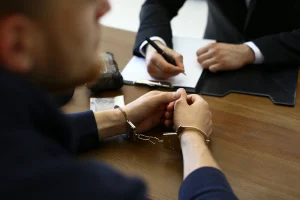
You are on probation. You thought the hard part was behind you — the arrest, the charges, the sentencing. You have been doing your best to comply. But now something has gone wrong. Maybe you missed a meeting with your probation officer. Maybe you tested positive on a drug test. Maybe a new arrest has put everything you worked for at risk. And now you are facing a probation violation in Pennsylvania and trying to figure out what that actually means for your freedom.
Here is the reality: a probation violation hearing in Pennsylvania is one of the most underestimated legal proceedings a defendant can face. The rules are different from a criminal trial, the standard of proof is lower, and the consequences — serving the full original sentence you avoided when you were placed on probation — can be severe. The judge has enormous discretion, and what you do between now and that hearing matters.
As a former Philadelphia prosecutor with over 10 years in the District Attorney’s Office and more than 400 jury trials, I have seen how these proceedings unfold from both sides. This guide covers what constitutes a probation violation in Pennsylvania, how the hearing process works, what defenses are available, and what steps you need to take right now to protect yourself.
What Is Probation in Pennsylvania and What Does It Require?
Probation in Pennsylvania is a sentence imposed by a court that allows a defendant to serve their sentence in the community rather than in prison, subject to specific conditions and supervision. It is governed primarily by 42 Pa. C.S. § 9754, which authorizes courts to place defendants on probation and attach conditions to that probation.
Probation is not a free pass. It is a conditional liberty — one that can be taken away if the conditions are not met. When a court sentences someone to probation, it is extending an opportunity that comes with obligations. Violating those obligations puts the entire original sentence back on the table.
Standard probation conditions in Pennsylvania typically include:
- Reporting regularly to a probation officer at scheduled intervals
- Remaining within the jurisdiction or obtaining permission before traveling
- Maintaining stable employment or enrollment in school
- Refraining from any further criminal conduct or arrests
- Submitting to drug and alcohol testing
- Paying all fines, restitution, and court costs on schedule
- Attending required counseling, treatment, or educational programs
- Avoiding contact with specific individuals (victims, co-defendants, or others as ordered)
- Not possessing firearms or other weapons
In addition to these standard conditions, judges frequently impose case-specific requirements: alcohol monitoring bracelets, GPS monitoring, curfews, random home visits, or mandatory participation in drug treatment programs. Every condition listed in your sentencing order carries equal weight — there is no such thing as a minor condition that is optional to follow.
What Triggers a Probation Violation in Pennsylvania
Probation violations fall into two broad categories. Understanding which type you are facing matters because it affects how the hearing proceeds and what arguments are available to you.
Technical Violations
A technical violation is a failure to comply with a condition of probation that does not itself constitute a new crime. These are extremely common — and they are taken seriously by Pennsylvania courts. Common technical violations include:
- Missing a scheduled appointment with your probation officer
- Failing to report a change of address or employment
- Testing positive for drugs or alcohol (even marijuana, if prohibited by your conditions)
- Leaving the jurisdiction without permission
- Failing to pay restitution or court costs on schedule
- Violating a no-contact order
- Failing to attend required counseling or treatment sessions
- Curfew violations
Many defendants are blindsided by technical violation proceedings because they assumed that no new crime meant no real problem. That assumption is wrong. Pennsylvania courts treat technical violations as meaningful breaches of the agreement that kept a defendant out of prison, and judges retain full authority to revoke probation and impose incarceration for technical violations alone.
New Criminal Conduct Violations
A new arrest or criminal charge while on probation is one of the most serious triggers for a violation proceeding in Pennsylvania. Even a misdemeanor arrest can set off a probation violation hearing that puts a far longer sentence back in play.
One of the most important things to understand here is the timing dynamic: your probation can be violated based on a new arrest even if you are ultimately acquitted of the new charge. The standard of proof at a probation violation hearing — a preponderance of the evidence, meaning more likely than not — is significantly lower than the beyond-a-reasonable-doubt standard required for a criminal conviction. A judge can find that you violated probation by committing a new offense even if the jury in the criminal case returns not guilty.
This is not a hypothetical scenario. It happens, and it catches defendants and their families completely off guard when it does.
| Critical Point: Lower Standard of Proof At a probation violation hearing in Pennsylvania, the prosecution does not need to prove the violation beyond a reasonable doubt. They only need to establish it by a preponderance of the evidence — essentially, that it is more likely than not that you violated your conditions. This is a fundamentally different proceeding from a criminal trial, and the reduced evidentiary burden makes having an experienced attorney essential. |
How the Probation Violation Process Works in Pennsylvania
Understanding each stage of the probation violation process in Pennsylvania helps you know what to expect and where the opportunities for intervention exist.
Step 1: The Probation Officer’s Report
When a probation officer believes a condition has been violated, they file a violation report with the court. This report documents the alleged violation, the supporting evidence, and the officer’s recommendation. In cases involving a new arrest, the police report and charging documents typically accompany the violation report. In technical violation cases, the officer’s own records — attendance logs, drug test results, payment histories — form the basis of the report.
The violation report is not the final word on what happened. It reflects the probation officer’s perspective and is subject to challenge. An attorney who reviews the report before the hearing can identify factual inaccuracies, missing context, or procedural errors that could affect the outcome.
Step 2: Arrest or Summons
Depending on the severity of the alleged violation, the court may issue either a bench warrant for the defendant’s arrest or a summons requiring the defendant to appear at a hearing. For serious violations — new criminal conduct, absconding from supervision, repeated technical violations — a warrant is common, and the defendant may be held in custody pending the hearing. For minor technical violations, a summons allowing the defendant to remain free pending the hearing is more typical.
If a warrant has been issued for your arrest related to a probation violation, do not ignore it. An attorney can sometimes arrange a voluntary surrender that avoids the additional negative impression created by a physical arrest, and can argue for release or reduced bail at the initial appearance.
Step 3: The Gagnon I Hearing (Preliminary Hearing)
In Pennsylvania, the probation violation process is governed in part by the constitutional framework established in Gagnon v. Scarpelli, 411 U.S. 778 (1973). For defendants who are detained pending a violation hearing, Pennsylvania provides a two-stage process.
The first stage — sometimes called the Gagnon I hearing — is a preliminary hearing to determine whether there is probable cause to believe a violation occurred. This is not the full evidentiary hearing; its purpose is simply to establish whether the case should proceed. If probable cause is found, the case moves to the Gagnon II hearing.
Step 4: The Gagnon II Hearing (Full Violation Hearing)
The Gagnon II hearing is the full probation violation hearing — the proceeding where the judge makes a final determination on whether a violation occurred and what the consequence will be. This is the most important stage of the entire process.
Key features of the Gagnon II hearing in Pennsylvania:
- No jury — the judge decides both whether a violation occurred and what the sanction will be
- The prosecution proves the violation by a preponderance of the evidence, not beyond a reasonable doubt
- You have the right to be represented by counsel
- You have the right to present evidence and call witnesses on your behalf
- You have a limited right to confront adverse witnesses, though the confrontation rights are somewhat narrower than at a criminal trial
- The judge has broad discretion over the outcome — from continuing probation with no changes to revoking probation entirely and imposing the original sentence
What the Judge Can Do at a Probation Violation Hearing
One of the most important things to understand about probation violation hearings in Pennsylvania is the scope of the judge’s discretion. Unlike criminal sentencing, where guidelines provide a structured framework, probation revocation gives judges substantial latitude to fashion a response they believe is appropriate.
At the conclusion of a violation hearing, the judge may:
- Continue probation with no changes: The judge finds the violation was minor, the defendant’s overall compliance has been strong, or the circumstances are sufficiently mitigated, and simply continues the existing probation terms.
- Modify probation conditions: The judge imposes additional or more restrictive conditions — increased reporting requirements, drug testing, GPS monitoring, a short period of county jail time as a condition of continued probation, or mandatory participation in a treatment program.
- Extend the probation term: The judge adds additional time to the original probation sentence.
- Revoke probation and impose the original suspended sentence: The judge terminates probation entirely and sentences the defendant to serve the original prison term that was suspended when probation was imposed. This is the maximum consequence and the outcome every defendant is trying to avoid.
The judge’s decision is influenced by numerous factors: the nature and severity of the violation, the defendant’s overall compliance history, the circumstances surrounding the violation, whether there were mitigating factors such as medical issues or a genuine misunderstanding, the input of the probation officer, and the advocacy of defense counsel. An experienced attorney who prepares thoroughly and presents compelling mitigating evidence can meaningfully affect where on that spectrum the judge lands.
Defense Strategies at a Pennsylvania Probation Violation Hearing
A probation violation hearing is not simply a formality that ends in incarceration. There are real defense strategies available, and the right approach depends on the specific nature of the alleged violation and the facts surrounding it.
Challenging the Factual Basis for the Violation
The prosecution must prove the violation occurred. That means the evidence supporting the violation — drug test results, officer records, arrest reports — must be reliable and properly documented. Lab procedures for drug testing can be challenged. Probation officer records can contain errors. Arrest reports may reflect contested facts. An attorney who scrutinizes the evidence before the hearing may find genuine grounds to dispute whether a violation actually occurred.
Presenting Mitigating Circumstances
Even when a violation is not disputed, the circumstances surrounding it can significantly affect the outcome. A missed appointment caused by a documented medical emergency is different from an intentional no-show. A failed drug test in the context of a relapse by someone with a documented substance use disorder is different from someone who simply chose to use. Presenting medical records, employment documentation, treatment program records, and witness testimony that contextualizes the violation is one of the most effective tools available at a violation hearing.
Demonstrating Overall Compliance
Judges weigh the totality of a defendant’s probation record, not just the alleged violation. A defendant who has complied with every other condition for two years, maintained employment, paid all restitution, and completed required programs is in a fundamentally different position than someone with a history of repeated violations. Building and presenting a comprehensive compliance record — pay stubs, attendance records, program completion certificates, character references — is part of preparing a complete defense.
Addressing the New Charge Defense
When the alleged violation involves a new arrest, the defense strategy becomes more complex. In some cases, the attorney handling the violation hearing and the criminal defense attorney (if they are the same, as they should be) can coordinate the strategy so that arguments made at the violation hearing do not inadvertently prejudice the criminal case, and vice versa. This coordination requires experience in both arenas simultaneously — another area where a former prosecutor who handles both sides brings a genuine advantage.
Negotiating with the Probation Officer and Prosecution
Probation violation hearings are not always purely adversarial. In many cases, experienced defense counsel can engage with the probation officer and the prosecution before the hearing to negotiate a resolution — an agreed modification of conditions, a brief county jail sanction in lieu of full revocation, or a referral to a treatment program. These negotiations happen best when an attorney is involved early, before positions have hardened and the matter has escalated.
What to Do Right Now If You Are Facing a Probation Violation in Pennsylvania
The period between learning about an alleged violation and the hearing itself is where the most important preparation happens. Here is what to do immediately.
- Contact an experienced criminal defense attorney before your first court appearance. Do not go to a probation violation hearing without legal representation. The stakes are too high, and the procedural nuances are too significant to navigate alone.
- Do not make statements to your probation officer, police, or the court without your attorney present. Anything you say about the alleged violation — even an attempt to explain yourself — can be used against you at the hearing.
- Gather documentation. Collect anything that supports your position: medical records if a health issue caused a missed appointment, employment records if work obligations created a scheduling conflict, receipts or records that establish your whereabouts, or program attendance records that demonstrate ongoing compliance.
- Do not miss any current probation appointments or obligations. Continuing to comply with your probation conditions between the violation allegation and the hearing demonstrates good faith and can be presented favorably to the judge.
- If a warrant has been issued, do not ignore it. An attorney can sometimes arrange a voluntary surrender and argue for release or modest bail at the initial appearance, which is a far better position than being arrested.
- Be honest with your attorney about everything. Your attorney cannot help you effectively without knowing all of the facts — including unflattering ones. Attorney-client privilege protects these conversations, and full candor is the foundation of an effective defense.
Why Philadelphia Defendants Choose DiDonato & Burke Law Firm for Probation Violations
Thomas F. Burke spent over a decade as a prosecutor in the Philadelphia District Attorney’s Office — including in the elite homicide unit — before building a criminal defense practice that has served Philadelphia defendants for more than 20 years. More than 400 jury trials. Thousands of cases across every category of Pennsylvania criminal law.
Probation violation proceedings require an attorney who understands both the criminal defense side and the way prosecutors and probation officers approach these cases — because both perspectives are in play. My prosecutorial background means I know how probation officers document violations, how prosecutors present them at hearings, and what judges in Philadelphia are looking for when they decide whether to revoke or continue probation.
At DiDonato & Burke Law Firm, every client works directly with Thomas Burke. No handoffs. No junior associates running your hearing while the attorney you hired is somewhere else. When your probation — and the sentence behind it — is on the line, you deserve experienced, direct representation at every stage of the process.
- Aggressive challenge of the factual and procedural basis for the alleged violation
- Thorough preparation of mitigating evidence and compliance documentation
- Coordination of violation defense with any pending criminal charges
- Pre-hearing negotiation with probation officers and prosecution when appropriate
- Direct access to Thomas Burke throughout the entire process
- Courts recognize and prosecutors respect — a track record built on results
| When Winning Matters Most A probation violation in Pennsylvania can put the full original sentence back on the table. Do not walk into that hearing alone. Former Philadelphia prosecutor Thomas F. Burke fights for your freedom at every stage. Call (215) 567-1248 for a free, confidential consultation. Available Monday through Friday, 8 AM to 8 PM, and by appointment on weekends. |
Frequently Asked Questions
What happens at a probation violation hearing in Pennsylvania?
A probation violation hearing is a formal court proceeding where the judge decides whether you violated your probation conditions and what the consequence will be. There is no jury. The prosecution proves the violation by a preponderance of the evidence — more likely than not — rather than beyond a reasonable doubt. The judge can continue probation unchanged, modify the conditions, extend the probation term, or revoke probation and impose the original suspended sentence. Having experienced legal representation is essential.
Can you go to jail for a technical probation violation in Pennsylvania?
Yes. Even a technical violation — such as a missed probation meeting or a failed drug test — can result in incarceration. The judge has discretion to revoke probation and impose the original sentence. However, an experienced attorney can present mitigating circumstances, challenge the basis for the violation, and argue for alternatives such as modified conditions, treatment programs, or community service instead of incarceration.
Does a new arrest automatically violate probation in Pennsylvania?
A new arrest does not automatically constitute a violation, but it typically triggers a violation hearing. Your probation officer will report the arrest to the court, and the judge will decide whether it constitutes a violation of your conditions. Critically, a violation can be found even if you are acquitted of the new charge, because the standard of proof at the violation hearing is lower than at a criminal trial.
Do you have the right to an attorney at a probation violation hearing in Pennsylvania?
Yes. You have the right to legal representation at a probation violation hearing under both Pennsylvania law and the U.S. Constitution. Given that the possible consequence includes serving the full original sentence, exercising that right is essential. An attorney can challenge the evidence, cross-examine witnesses, present mitigating factors, and argue for the least restrictive outcome available.
What is the difference between probation and parole in Pennsylvania?
Probation is a sentence served in the community as an alternative to incarceration, imposed directly by the sentencing court. Parole is supervised release following a period of incarceration. Both involve conditions and both can be violated. Probation violations are handled by the original sentencing court. Parole violations for state sentences are handled by the Pennsylvania Board of Probation and Parole; county-level parole violations go back to the sentencing court.
Can a probation violation be expunged from your record in Pennsylvania?
A probation violation adjudication is not independently expungeable as a separate matter. However, the underlying offense that led to probation may be eligible for expungement under certain circumstances, particularly for summary offenses or cases resolved through ARD. If probation was revoked and additional time was served, this affects future expungement eligibility. An attorney can evaluate your specific record and advise on available options.
How long does a probation violation hearing take in Philadelphia?
A straightforward technical violation hearing may take under an hour. Hearings involving new criminal conduct, disputed facts, or multiple violations may take significantly longer and may be continued across multiple court dates while new charges are pending. Your attorney can give you a realistic timeline based on the specifics of your case and the current court calendar in Philadelphia.
What should I do immediately if I am accused of violating probation in Pennsylvania?
Contact an experienced criminal defense attorney as soon as possible — ideally before your first court appearance on the violation. Do not make statements to your probation officer, police, or the court without counsel. Gather documentation that supports your position: medical records, employment records, receipts, or communications that explain missed appointments or test results. Early attorney involvement creates the most options for your defense.
Next Steps: Protect Your Freedom Before the Hearing
A probation violation hearing in Pennsylvania moves quickly, and the outcome depends heavily on what happens before you walk into the courtroom. The preparation your attorney does in the days and weeks leading up to the hearing — gathering evidence, reviewing the probation officer’s report, engaging with the prosecution, and building a mitigating case — is where violations are won or lost.
If you are facing a probation violation allegation in Philadelphia or anywhere in Pennsylvania, do not wait. The earlier an experienced attorney is involved, the more options you have and the better your chances of keeping your freedom.
| Contact DiDonato & Burke Law FirmToday Call (215) 567-1248 for a free, confidential consultation. Former Philadelphia prosecutor Thomas F. Burke is available Monday through Friday, 8 AM to 8 PM, and by appointment on weekends. Serving clients throughout Philadelphia and the surrounding region.Online: burkecriminallaw.com/contact |
About the Author
Thomas F. Burke, Esquire is a former Philadelphia homicide prosecutor and managing partner of DiDonato & Burke Law Firm. During his 10+ years in the Philadelphia District Attorney’s Office — including service in the elite homicide unit as one of its youngest prosecutors — Mr. Burke tried over 400 jury trials and handled thousands of criminal cases at every level of the Pennsylvania court system. Since 2003, he has applied that prosecutorial experience to defending Philadelphia clients facing charges from misdemeanors to murder. Contact him at (215) 567-1248 for a free consultation.
Disclaimer:This content provides general information about Pennsylvania criminal law and is not legal advice. Every case is unique and requires individual analysis. For specific legal advice about your situation, contact DiDonato & Burke Law Firm at (215) 567-1248. Past results do not guarantee future outcomes.